· four exchange APIs · rebuilt daily
Proper position sizing crypto futures limits your loss before setting leverage
The finding
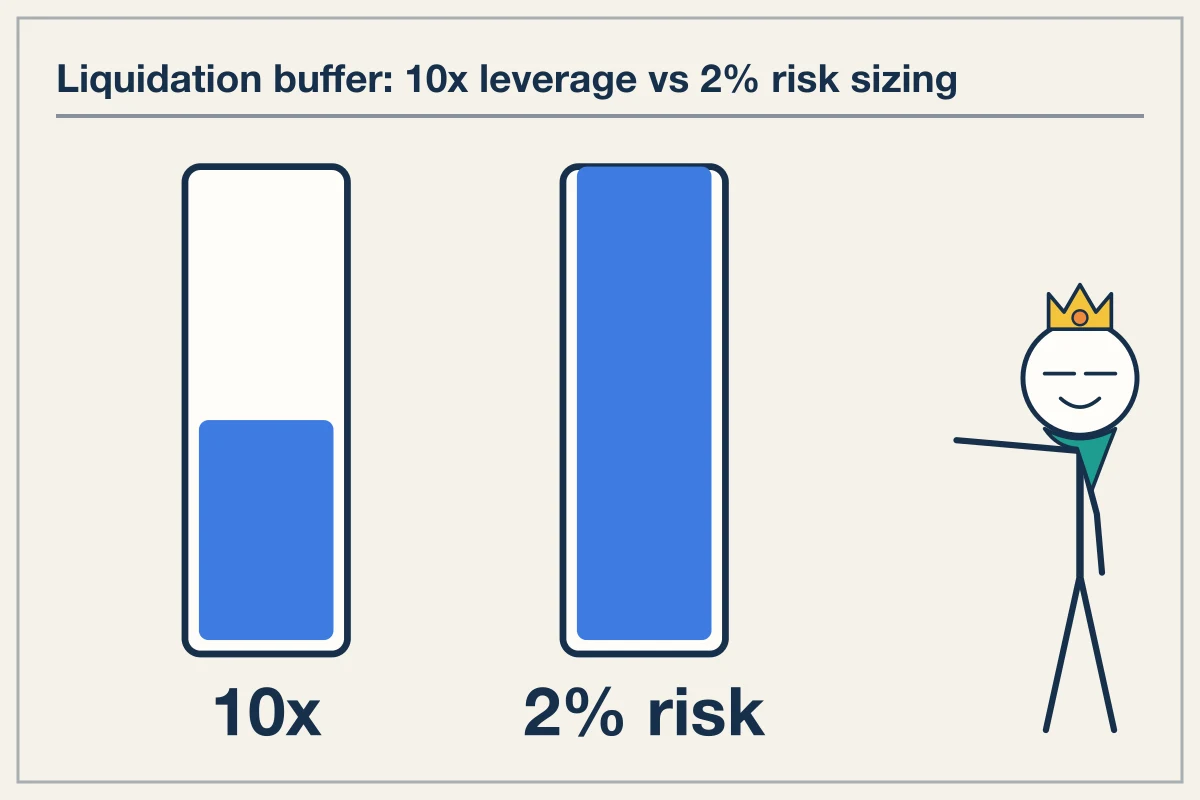
Sizing a perpetual position by venue leverage instead of absolute risk moves your liquidation point 18% closer to entry on a 10x trade.
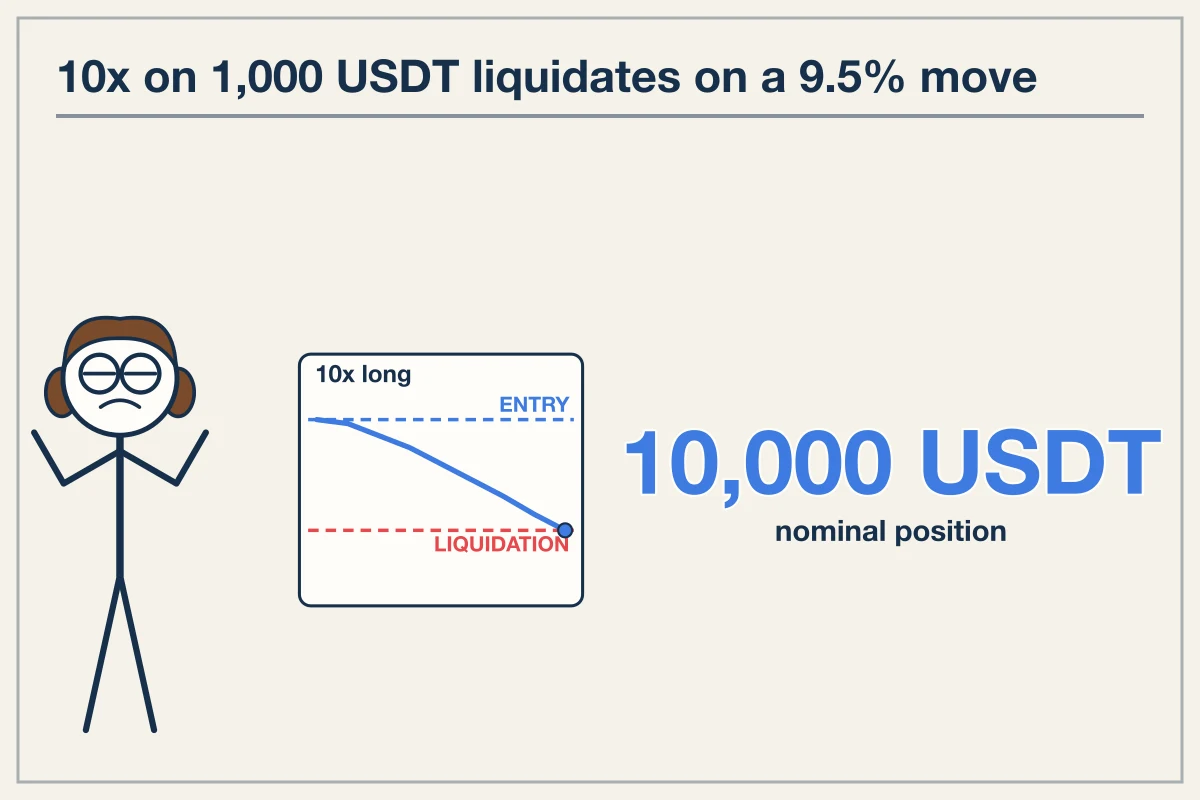
A 1,000 USDT account at 10x leverage creates a 10,000 USDT position size that liquidates on a 9.5% move.
Capping total risk at 2% of equity expands your liquidation buffer to 20% on the same trade.
Margin selection changes leverage, but position sizing must set the maximum dollar loss.
The mechanism of venue leverage vs dollar risk
Proper position sizing crypto futures requires starting with the maximum dollar loss you accept rather than the leverage multiplier your venue offers. Selecting 20x leverage on a 1,000 USDT account limits your maximum drawdown distance to roughly 4.5% before total liquidation.
Traders opening perpetual positions usually select leverage first on the exchange interface. Selecting 10x leverage auto-fills position size to ten times account equity. This ties drawdown capacity directly to margin requirements rather than market structure.
On a 1,000 USDT account balance, choosing 10x leverage yields a 10,000 USDT nominal position. A 9.5% adverse price move depletes the 1,000 USDT collateral after accounting for a standard 0.50% maintenance margin requirement. Liquidation occurs at a price dictated entirely by the venue's leverage slider rather than a technical chart level.
How fixed risk changes position sizing crypto futures
Fixed-risk sizing reverses this leverage-first process. You select maximum acceptable dollar loss and price invalidation distance first. Nominal position size then becomes acceptable dollar loss divided by the percentage distance to your stop loss.
Assume a 1,000 USDT account balance and a risk rule capping drawdown at 2% per trade. Your maximum acceptable loss is 20 USDT. If technical invalidation sits 5% away from entry, target position size equals 20 USDT divided by 0.05, yielding a 400 USDT position size.
Holding a 400 USDT position on a 1,000 USDT account balance represents an effective account leverage of 0.4x. You can execute this trade using 40 USDT in margin at 10x cross leverage, leaving 960 USDT in unallocated account balance. If price hits the stop loss, loss equals exactly 20 USDT.
Worth knowing
Setting position size by invalidation distance separates market exposure from collateral requirements, preventing liquidation before price reaches your technical stop.
Holding costs and execution fees across exchanges
Nominal position size determines entry costs, exit costs, and 8-hour funding settlements. Sizing by leverage inflates nominal position size, multiplying fee drag on capital.
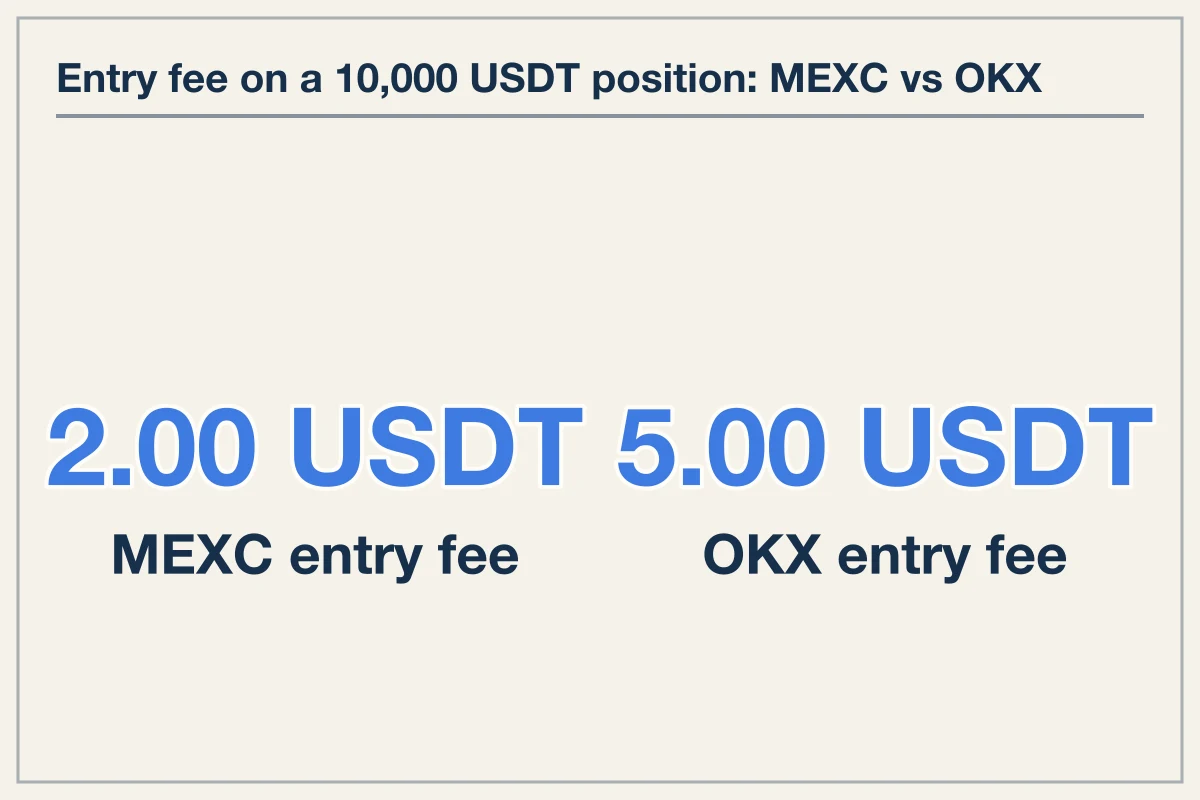
The table below shows entry taker fees and live 8-hour funding rates for BTC perpetual contracts across four exchanges based on a 10,000 USDT nominal position.
| Venue | Futures Taker Fee | BTC 8h Funding Rate | Entry Fee on 10,000 USDT | 8h Funding Payment |
|---|---|---|---|---|
| MEXC | 0.0002% | +0.0065% | 2.00 USDT | 0.65 USDT |
| Bitget | 0.0003% | +0.0077% | 3.00 USDT | 0.77 USDT |
| OKX | 0.0005% | +0.0046% | 5.00 USDT | 0.46 USDT |
| Bybit | 0.00055% | +0.0098% | 5.50 USDT | 0.98 USDT |
Where this goes wrong
Taker fees apply to total nominal position size rather than collateral. Entering a 10,000 USDT position at Bybit costs 5.50 USDT in taker fees, eroding 27.5% of a 20 USDT risk budget on entry alone.
Liquidation mechanics on leverage-based sizing
Maintenance margin rates determine the price where exchanges auto-liquidate positions. OKX and Bitget set baseline maintenance margin for BTC perps at 0.50%. When remaining margin falls below maintenance requirements, the exchange takes over the order.
At 20x leverage on a 1,000 USDT account, total nominal position is 20,000 USDT backed by 1,000 USDT margin. Maintenance margin required is 100 USDT (20,000 USDT multiplied by 0.005). Equity drops to maintenance levels when position losses reach 900 USDT.
A price decline of 4.5% causes a 900 USDT unrealized loss, triggering liquidation. In contrast, sizing a trade for a fixed 20 USDT loss at a 5% stop loss allows price to move 5% against you while preserving 980 USDT of total account collateral.
What to do instead
Calculate position nominal value by dividing maximum dollar risk by percentage distance to stop loss before setting order collateral.
How do you calculate position size for crypto futures?
Divide your maximum acceptable dollar loss by the percentage distance to your stop loss. A 20 USDT risk limit with a 5% stop loss yields a target position size of 400 USDT.
What is the difference between margin and position size?
Margin is the collateral committed to keep a contract open, while position size is the total nominal value of the contract. Execution fees and funding payments apply to total position size rather than committed margin.
How does leverage affect liquidation price in perpetual contracts?
Higher leverage increases total nominal size relative to collateral, bringing your liquidation price closer to entry. At 20x leverage, a 4.5% price move against your position triggers liquidation under a 0.5% maintenance margin requirement.
Which exchange has the lowest taker fees for perpetual futures?
MEXC offers the lowest baseline futures taker fee at 0.0002%, compared to Bitget at 0.0003%, OKX at 0.0005%, and Bybit at 0.00055%.