· four exchange APIs · rebuilt daily
How to buy a supercar with crypto without paying excess fees
The finding
Processing a 300,000 USD transaction to buy a supercar with crypto incurs up to 9,000 USD in gateway conversion markups alongside immediate capital gains liabilities.
Merchant processors add a 1 percent to 3 percent fee above exchange spot rates.
Delivery lockups of up to 14 days expose buyers to market volatility unless hedged.
Direct order book off-ramps cut execution costs by over 80 percent compared to payment processors.
Payment processor mechanics and settlement markups
When you attempt to buy a supercar with crypto, luxury dealerships rarely take direct protocol transfers to their self-custody wallets. They utilize third-party merchant gateways that accept token transfers and wire fiat to the dealer bank account.
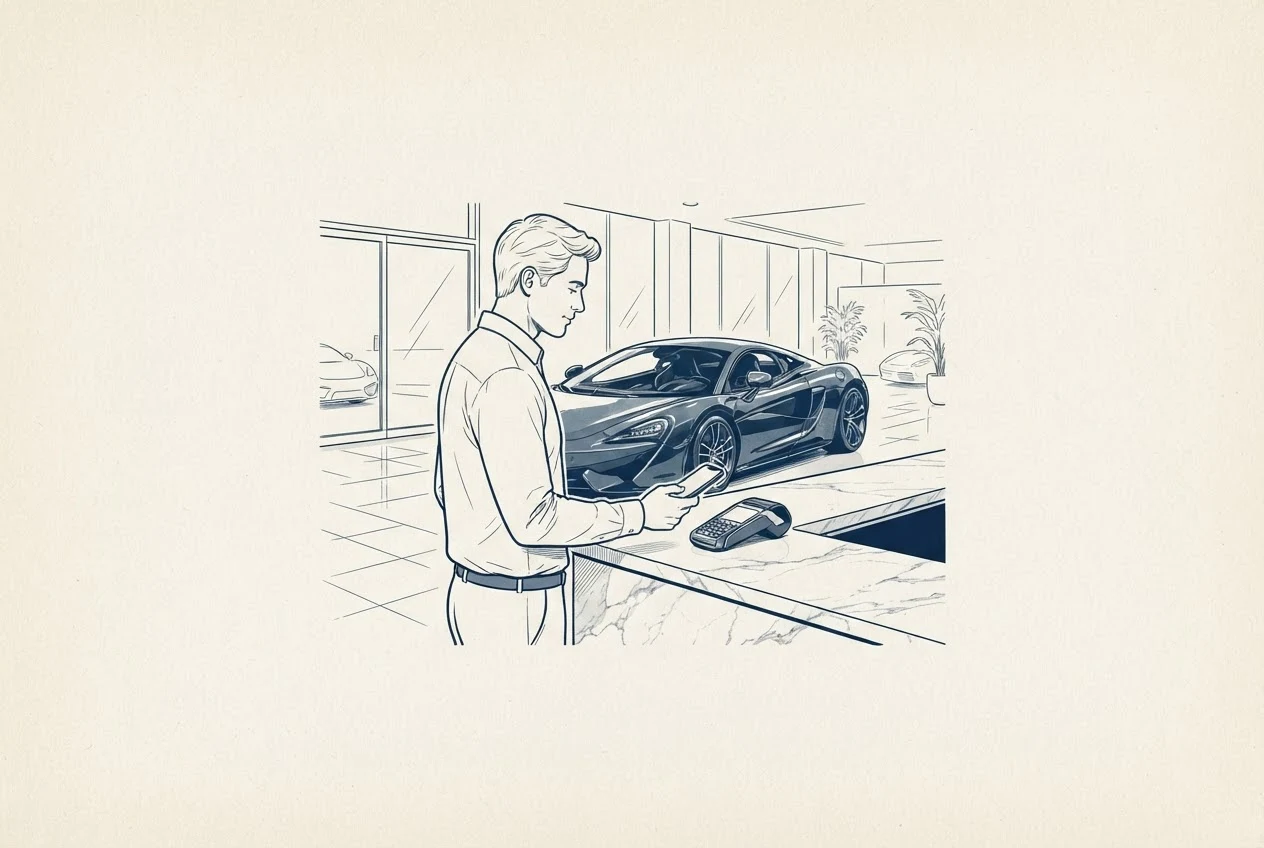
These processors quote a guaranteed exchange rate valid for 15 to 30 minutes. To protect themselves against market volatility during this window, gateways build a buffer into their exchange rate. This spread ranges from 100 to 300 basis points over prevailing spot prices.
Where this goes wrong
Gateway conversion fees on a 300,000 USD car purchase cost between 3,000 USD and 9,000 USD in hidden markups, far exceeding standard exchange taker fees.
On a purchase of 300,000 USD, a 3 percent processor markup costs 9,000 USD. The payment processor converts the asset immediately on open markets or internal desks, keeping the spread as revenue.
How to buy a supercar with crypto using exchange off-ramps
Direct order book execution offers tighter execution than payment gateways. Selling spot assets on a high-volume exchange and wiring fiat directly to the dealership escrow account avoids processor spreads.
On Bybit or OKX, default spot taker fees are 0.10 percent. Executing a 300,000 USD spot market sale at a 0.10 percent taker fee costs 300 USD, compared to 9,000 USD through a gateway.
Worth knowing
Dealer escrow accounts require wire transfers from bank accounts under the same legal name as the vehicle registration title to satisfy anti-money laundering regulations.
The primary bottleneck with exchange off-ramping is bank transfer timing. Fiat clearing through Fedwire or SEPA takes between 24 hours and three business days. During this clearance period, vehicle allocation remains unconfirmed unless a deposit is secured.
Tax classification and disposition events in major jurisdictions
In the United States, United Kingdom, and European Union, transferring crypto directly to a merchant to purchase a vehicle is classified as a property disposition. The tax authority treats the transaction as a spot sale at fair market value followed by a fiat purchase.

If 3 BTC were acquired at a cost basis of 20,000 USD per coin (60,000 USD total) and transferred to a dealership when BTC trades at 100,000 USD (300,000 USD total), the realized capital gain is 240,000 USD.
At a 20 percent long-term capital gains tax rate, the resulting tax liability is 48,000 USD. Paying the merchant directly in crypto does not defer or eliminate this capital gains obligation.
Using crypto as collateral for a fiat loan avoids an immediate tax disposition, but introduces liquidation risk if collateral valuations decline.
Hedging delivery lockups with perpetual futures
Vehicle delivery cycles often require a 10 to 14 day delay between purchase agreement signing and wire finalization. If you lock in a vehicle price in fiat but hold crypto until wire day, market declines reduce your purchasing power.
Opening an equivalent short perpetual futures position neutralizes spot price movement during the delivery window. The cost to maintain this hedge depends on exchange taker fees and live funding rates.
| Exchange | Futures Taker Fee | BTC 8h Funding Rate | ETH 8h Funding Rate | Spot Taker Fee |
|---|---|---|---|---|
| Bitget | 0.030% | +0.0037% | +0.0100% | 0.100% |
| Bybit | 0.055% | +0.0040% | +0.0020% | 0.100% |
| MEXC | 0.020% | +0.0012% | +0.0029% | 0.050% |
| OKX | 0.050% | -0.0016% | +0.0088% | 0.100% |
What to do instead
Use short perpetual futures on venues with negative or near-zero funding to lock in fiat purchasing power while wire clearing completes.
Holding a 300,000 USD short BTC position on OKX yields a receive rate of 0.0016 percent every 8 hours under current rates. Over 10 days (30 funding intervals), the position collects 144 USD in funding payments while fully hedging spot downside.
Does buying a car with crypto avoid capital gains tax?
No. Tax authorities in major jurisdictions treat spending crypto on goods as a taxable disposition at fair market value. Capital gains tax is owed on the difference between your cost basis and the asset value at transaction time.
How much do payment gateways charge to process crypto car purchases?
Payment processors typically charge between 1 percent and 3 percent above spot market price in exchange rate markups. On a 300,000 USD purchase, this markup equals 3,000 USD to 9,000 USD.
How can you protect spot value while waiting for bank settlement?
Opening a 1x short perpetual futures contract equal to the transaction amount locks in fiat value during settlement delays. This hedges spot price drops between agreement signing and bank transfer execution.
Why do dealerships reject direct wallet-to-wallet transfers?
Dealerships require clean audit trails for corporate accounting and compliance with anti-money laundering regulations. Direct protocol transfers present volatile revenue recognition issues and legal compliance risks for their accounting departments.