· four exchange APIs · rebuilt daily
Bitcoin block 9 date mined was January 9 2009
The finding
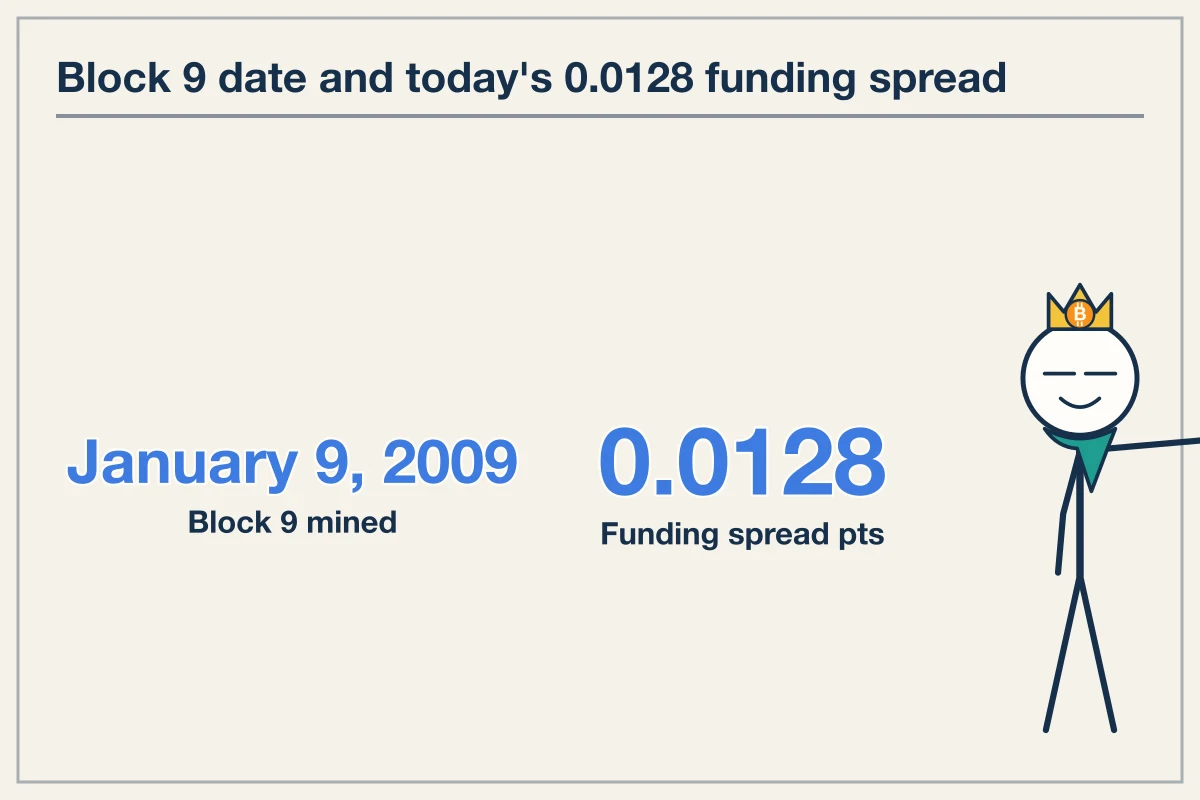
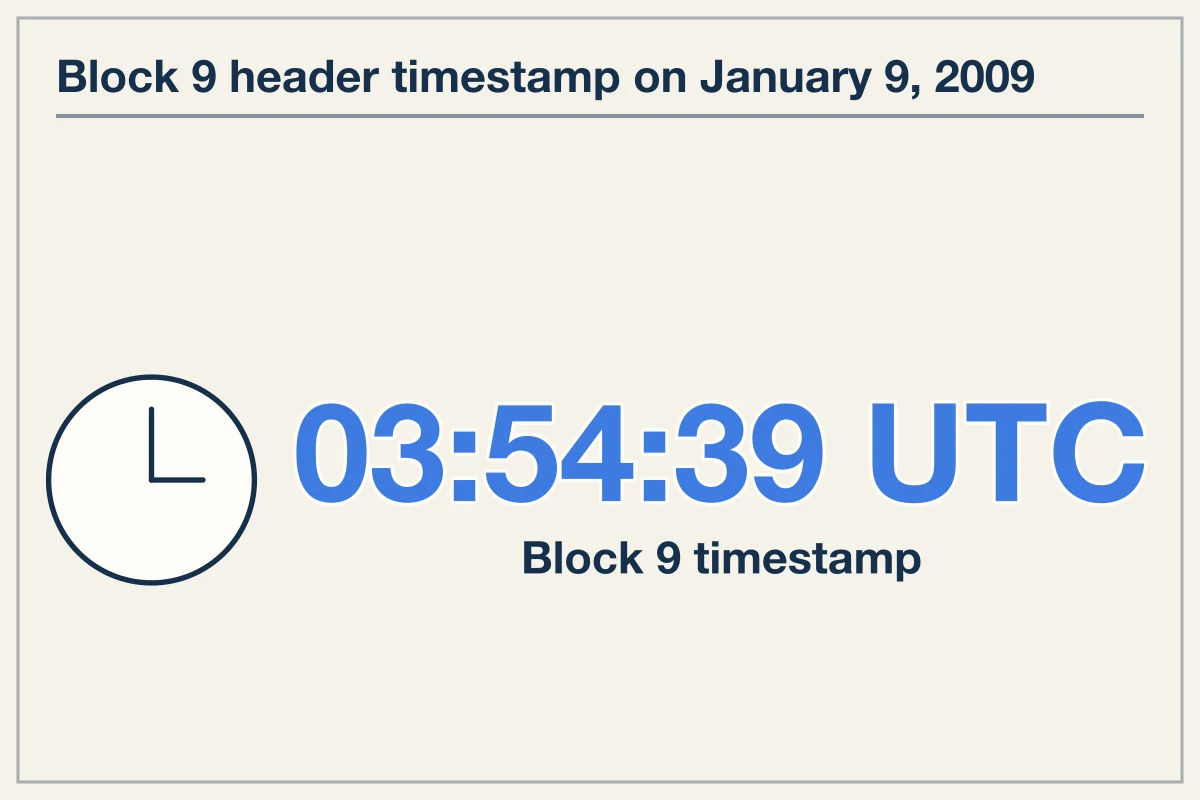
The bitcoin block 9 date mined record is January 9, 2009, at 03:54:39 UTC.
Block 9 created 50 BTC in block subsidy and holds historical importance as the source of the first Bitcoin transaction.
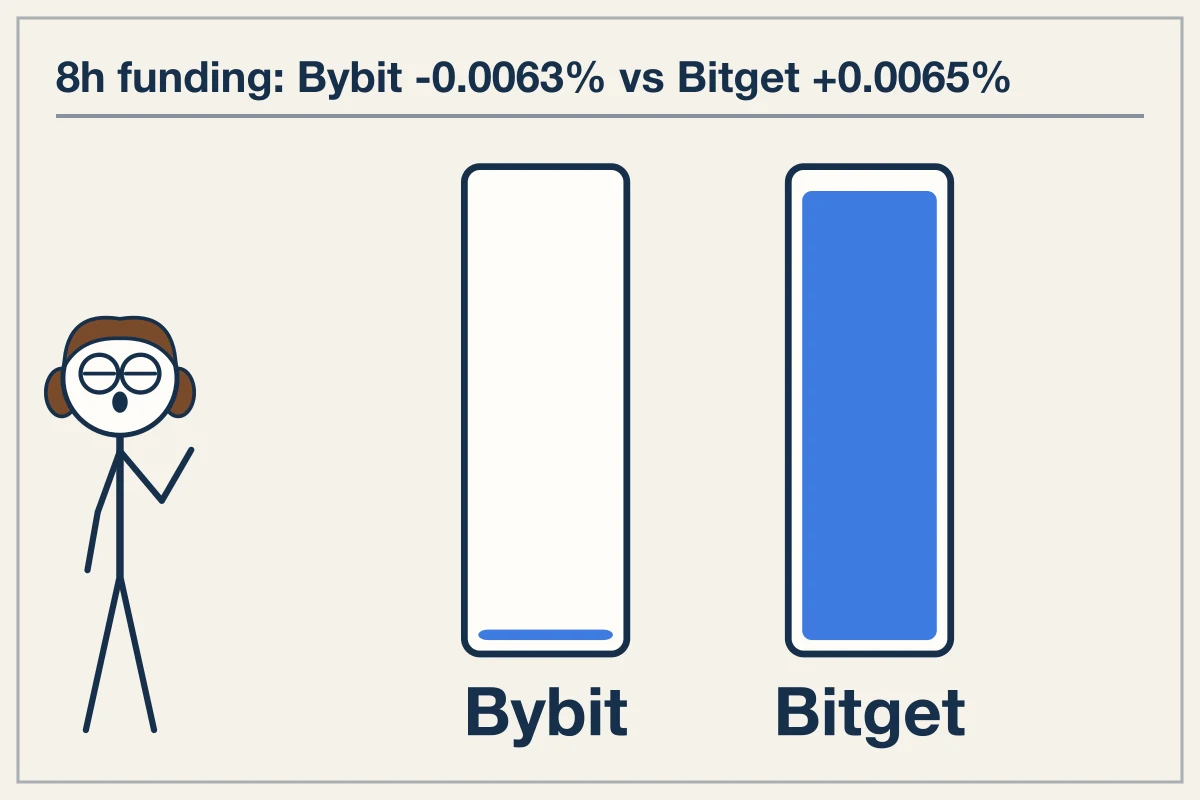
Modern perpetual swap venue funding rates settle on fixed schedules, where holding a BTC long currently earns 0.0063% per 8h on Bybit and costs 0.0065% per 8h on Bitget.
The current funding spread across exchanges is 0.0128 percentage points per 8-hour period on $5,369,210,496 in 24-hour volume.
Historical timestamp of bitcoin block 9
Bitcoin block 9 was generated six days after the genesis block. The exact timestamp recorded in the block header is January 9, 2009, at 03:54:39 UTC. The block hash contains eighteen leading zeros under the initial network difficulty setting of 1.
Satoshi Nakamoto mined this block using a single CPU. Early block times varied significantly because network hash rate was low and block discovery was irregular. The genesis block was mined on January 3, 2009, and block 1 was mined on January 9, 2009, after a six-day gap. Blocks 1 through 9 were solved in rapid succession within hours on the same calendar day.
Worth knowing
Bitcoin block headers use Unix epoch timestamps accurate to within two hours of consensus network time.
The bitcoin block 9 date mined and transaction mechanics
The bitcoin block 9 date mined timestamp marks the creation of the specific unspent transaction output used in the first peer-to-peer transaction. On January 12, 2009, three days after block 9 was mined, Satoshi Nakamoto sent 10 BTC from block 9 to developer Hal Finney in block 170.
On-chain consensus relies on block header timestamps to calculate difficulty adjustments every 2,016 blocks. Centralized derivatives venues do not use proof-of-work timestamps. Instead, perpetual futures platforms settle funding rates using centralized server clocks every 8 hours at 00:00, 08:00, and 16:00 UTC.
Where this goes wrong
On-chain transactions require network block confirmations, whereas perpetual futures settlement occurs instantly inside exchange matching engines without block generation delays.
Current market rates for BTC perpetual futures
Derivative markets allow traders to hold exposure to BTC without waiting for block generation or paying on-chain network transaction fees. Exchange perpetual swaps charge periodic funding rates every 8 hours to align perp prices with index spot prices.
| Venue | 8h Funding Rate | Futures Maker Fee | Futures Taker Fee |
|---|---|---|---|
| Bybit | -0.0063% | 0.0002 | 0.00055 |
| MEXC | -0.0008% | 0.0000 | 0.00020 |
| OKX | +0.0030% | 0.0002 | 0.00050 |
| Bitget | +0.0065% | 0.0002 | 0.00030 |
The funding rate spread across these four venues is 0.0128 percentage points per 8-hour interval. Bybit offers the lowest holding cost for long positions, paying long position holders 0.0063% every 8 hours. Bitget charges long position holders 0.0065% every 8 hours.
Holding costs and fee arithmetic across venues
Execution fees and funding payments determine the total cost of maintaining a BTC position. On a position size of $100,000, taker execution costs vary from $20.00 on MEXC to $55.00 on Bybit.
A trader holding a $100,000 BTC long position on Bybit receives $6.30 in funding every 8 hours, totaling $18.90 per 24-hour period. The same $100,000 long position on Bitget incurs a funding charge of $6.50 every 8 hours, totaling $19.50 per 24-hour period.
What to do instead
Calculate venue execution fees alongside expected 24-hour funding payments when selecting an exchange for position holding.
Over a 30-day period, holding a $100,000 long position on Bybit yields $567.00 in received funding payments. Holding that same position on Bitget costs $585.00 in paid funding. The venue selection difference equals $1,152.00 per month on a $100,000 position. Total daily trading volume across these platforms for BTC perpetual swaps stands at $5,369,210,496.
Exactly when was bitcoin block 9 mined?
Bitcoin block 9 was mined on January 9, 2009, at 03:54:39 UTC. It contained a 50 BTC block reward assigned to Satoshi Nakamoto.
Why is bitcoin block 9 historically significant?
Block 9 provided the 50 BTC coinbase output that Satoshi Nakamoto used to send 10 BTC to Hal Finney on January 12, 2009. This transfer was the first transaction between two users on the Bitcoin network.
Which venue has the lowest holding cost for a BTC long perpetual position?
Bybit currently offers the lowest holding cost for long positions with a funding rate of -0.0063% per 8 hours. Long position holders receive funding payments rather than paying them.
What is the current funding rate spread for BTC perpetual futures?
The spread between the highest funding rate on Bitget (+0.0065%) and the lowest funding rate on Bybit (-0.0063%) is 0.0128 percentage points per 8-hour period.