· four exchange APIs · rebuilt daily
Where do crypto millionaires live comes down to tax and venue access
The finding
Dubai, Singapore, and Switzerland hold the highest concentration of crypto wealth due to zero percent capital gains taxes and accessible fiat banking rails.
High-net-worth traders align tax residency with direct access to non-US perpetual futures venues.
A 1,000,000 USD ETH long position incurs 1,530 USD in monthly funding on OKX compared to 6,390 USD on MEXC.
Tax policy and banking access dictating where do crypto millionaires live
Understanding where do crypto millionaires live requires examining three policy pillars: personal tax liabilities, local banking access, and regulatory permission to trade offshore derivatives. Capital wealth migrates to jurisdictions that charge zero percent personal capital gains tax on digital asset transfers.
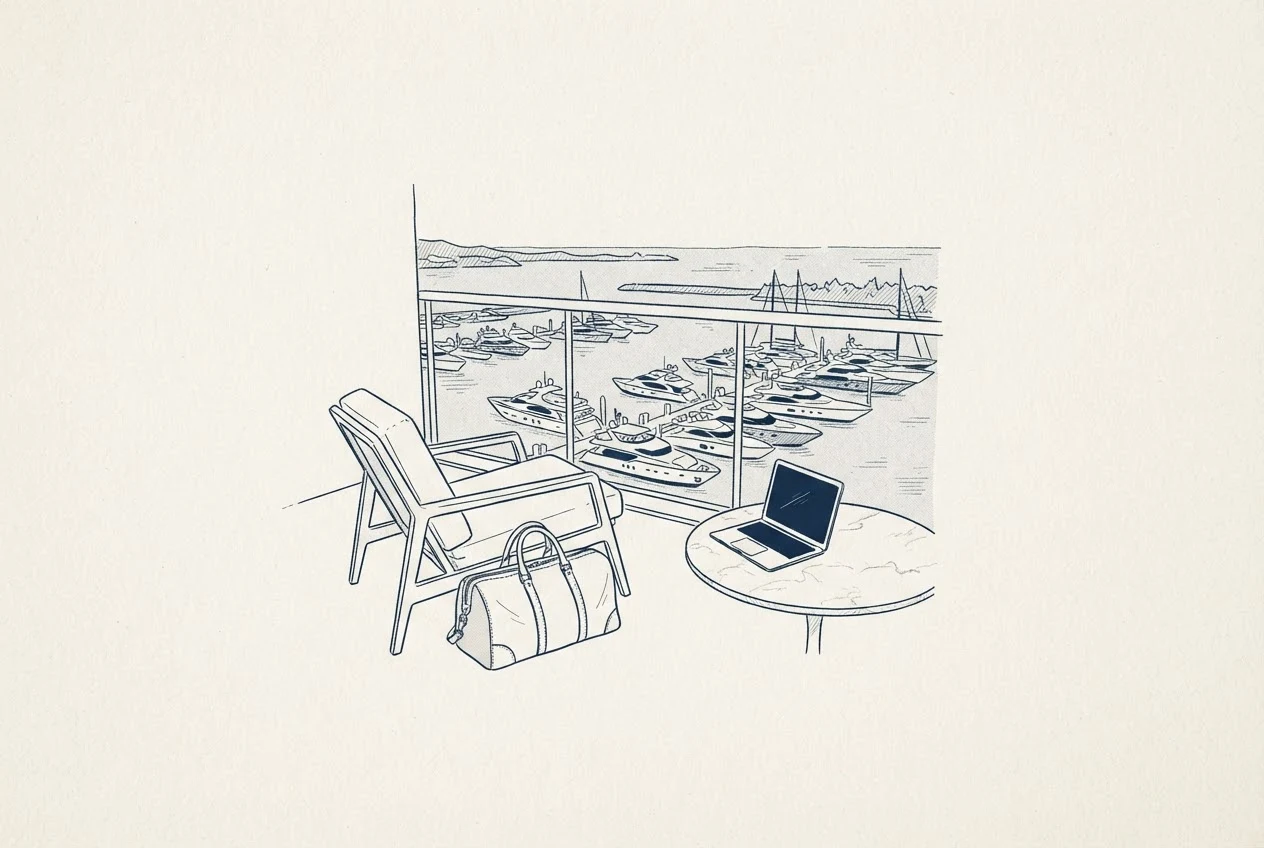
The United Arab Emirates, specifically Dubai, leads global relocation due to its zero percent capital gains tax rate and the Virtual Assets Regulatory Authority framework. Dubai allows direct conversion of digital assets into United Arab Emirates Dirhams through local financial institutions. Singapore follows a similar pattern through a territorial tax regime where capital gains remain untaxed, provided income does not originate from systematic commercial trading inside the city-state.
Switzerland provides another concentration of capital in Canton Zug. Individual private investors in Switzerland face zero capital gains tax on crypto assets held as private wealth, assuming the holder does not trigger professional trader status under Swiss Federal Tax Administration guidelines. Puerto Rico attracts US passport holders via Act 60, offering a zero percent capital gains rate on assets acquired after establishing residency, bypassing standard offshore tax exclusions.
Friction beyond tax: venue fee schedules and funding drag
Tax savings mean little if execution fees and funding rates consume position equity. Traders residing in zero-tax jurisdictions utilize access to primary offshore venues like OKX, Bybit, MEXC, and Bitget to execute perpetual futures contracts.
Fee structures across these platforms vary significantly between maker and taker tiers. MEXC offers a zero percent maker fee for futures trading, while Bybit charges 0.055 percent for taker executions.
| Venue | Spot Maker | Spot Taker | Futures Maker | Futures Taker |
|---|---|---|---|---|
| Bitget | 0.0010 | 0.0010 | 0.0002 | 0.0003 |
| Bybit | 0.0010 | 0.0010 | 0.0002 | 0.00055 |
| MEXC | 0.0000 | 0.0005 | 0.0000 | 0.0002 |
| OKX | 0.0008 | 0.0010 | 0.0002 | 0.0005 |
A trader placing a 500,000 USD futures order pays 100 USD as a maker on OKX at 0.0002 rates. That same order executed as a taker on Bybit incurs 275 USD in immediate trading costs.
Worth knowing
Zero-tax residency allows legal access to offshore order books, but exchange choice dictates whether fee drift destroys portfolio performance.
Worked example: 30-day position cost across top venues
Funding rates create continuous cash flows between long and short position holders every eight hours. For high-net-worth accounts holding large directional perps, this carry cost routinely exceeds local tax overhead.

| Asset | OKX 8h Rate | Bybit 8h Rate | MEXC 8h Rate | Bitget 8h Rate | Spread (8h) |
|---|---|---|---|---|---|
| ETH | +0.0017% | +0.0067% | +0.0071% | +0.0045% | 0.0054% |
| BTC | +0.0002% | +0.0015% | +0.0039% | +0.0041% | 0.0039% |
| SOL | +0.0034% | +0.0053% | +0.0007% | +0.0094% | 0.0087% |
| ZEC | +0.0100% | +0.0100% | -0.0010% | +0.0027% | 0.0110% |
| DOGE | +0.0023% | +0.0093% | +0.0100% | +0.0100% | 0.0077% |
| USELESS | +0.0283% | +0.0125% | +0.0136% | +0.0216% | 0.0158% |
Consider a trader holding a 1,000,000 USD ETH long position for 30 days. Thirty days equal 90 eight-hour funding intervals.
On OKX, the funding rate is +0.0017 percent per eight hours. Each interval costs 17 USD. Over 90 intervals, total funding paid equals 1,530 USD.
On MEXC, the funding rate for ETH is +0.0071 percent per eight hours. Each interval costs 71 USD. Over 90 intervals, total funding paid equals 6,390 USD.
The funding spread between OKX and MEXC on ETH stands at 0.0054 percentage points per interval. Holding the identical 1,000,000 USD position on MEXC costs 4,860 USD more over a single month than holding it on OKX.
Where this goes wrong
Holding longs on venues with inflated funding rates causes steady margin bleed that can force liquidation even during sideways price consolidation.
Banking rails and compliance limits for high-volume traders
Relocating to Dubai or Singapore provides clear access to institutional OTC desks and commercial banking networks. Local institutions handle large wire transfers directly from offshore venues without flagging account activity as suspicious wealth generation.
A high-volume trader operating out of Dubai uses OTC brokers to settle tether or bitcoin directly into United Arab Emirates Dirhams. The funds reach local accounts within hours, ready for deployment into real estate or fixed income.
In contrast, traders remaining in high-tax jurisdictions face tax drag alongside restricted banking options. US or European residents often see accounts frozen when transferring high-volume fiat from offshore crypto platforms.
What to do instead
Calculate combined annual fee drag and funding payments before selecting a primary exchange venue from your tax-exempt location.
Where do crypto millionaires live to pay zero capital gains tax?
Crypto millionaires concentrate in Dubai, Singapore, Switzerland, and Puerto Rico. These jurisdictions offer zero percent personal capital gains tax regimes combined with direct local banking access for fiat conversion.
Which exchange has the cheapest funding rate for holding ETH long?
OKX currently offers the cheapest rate to hold an ETH long position at +0.0017 percent per eight-hour interval. MEXC is the most expensive of the major offshore venues at +0.0071 percent per interval.
How much does venue choice affect holding costs on a large perpetual position?
On a 1,000,000 USD ETH long held for 30 days, the funding cost difference between OKX and MEXC is 4,860 USD. Selecting the wrong venue doubles or triples carry friction regardless of local tax benefits.