· four exchange APIs · rebuilt daily
Funding rates, and why a 'correct' trade still bleeds
Perpetual futures don't expire, so exchanges use a funding rate to tether the perp price to spot. Longs pay shorts when funding is positive; shorts pay longs when it's negative. It settles every 8 hours on most venues.
Right now the widest funding on Bitget's USDT-M book is ONEUSDT at -0.4953% per interval — roughly -542.4% annualised if it held (it won't).
What that number actually tells you:
- Sign = which side is crowded. Deeply negative funding means shorts are paying to stay short,
which is a crowded-short tell, not a sell signal.
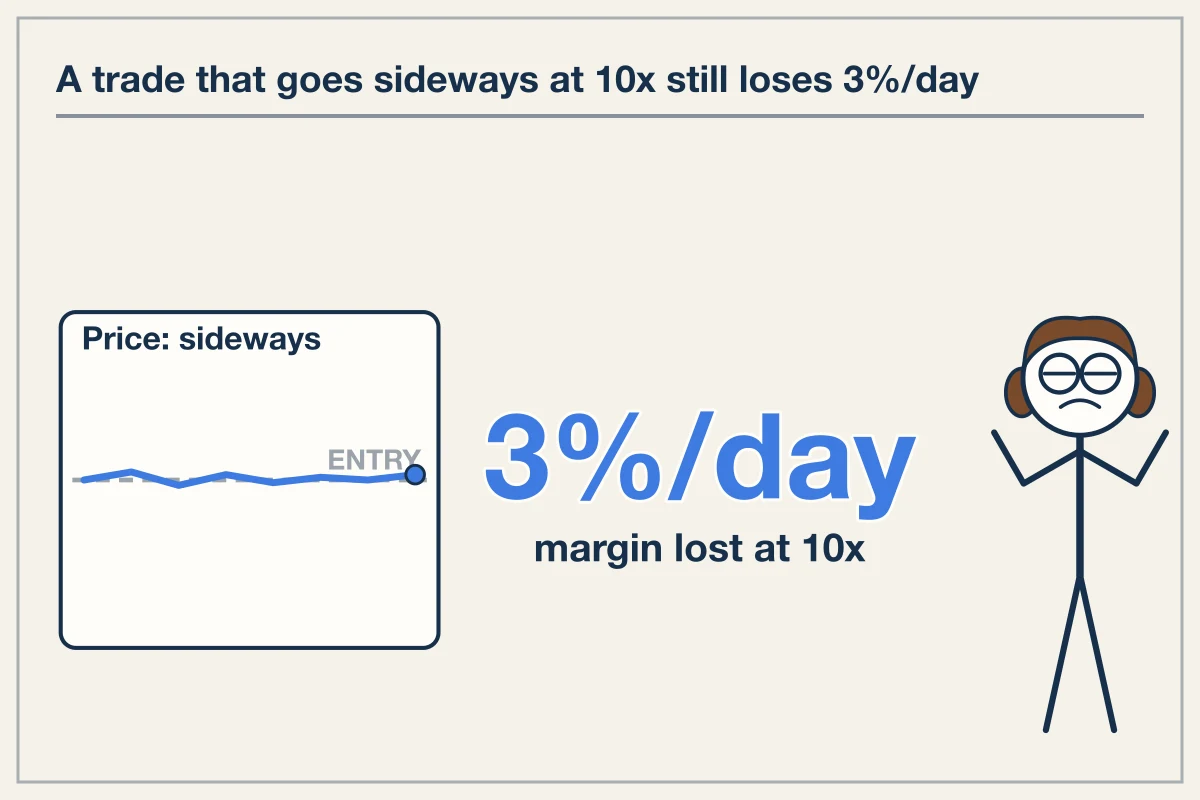
- Magnitude = cost of carry. A 0.1% funding print is 0.3%/day. On a 10x position that is 3%/day
of your margin, before fees. Most "the trade went sideways and I still lost" stories are this.
- Funding is not free money. The classic spot-long / perp-short basis trade collects funding but
eats fees on both legs and carries liquidation risk on the perp leg.
Do the arithmetic before the thesis. Fee + funding drag is the single most common reason a directionally-correct trade ends up flat.
Market context: Fear & Greed 71 (Greed), BTC dominance 58.7%.
Happy to be corrected on any of the arithmetic above.