· four exchange APIs · rebuilt daily
Infrastructure and Market Making Generated More Wealth Than Longs
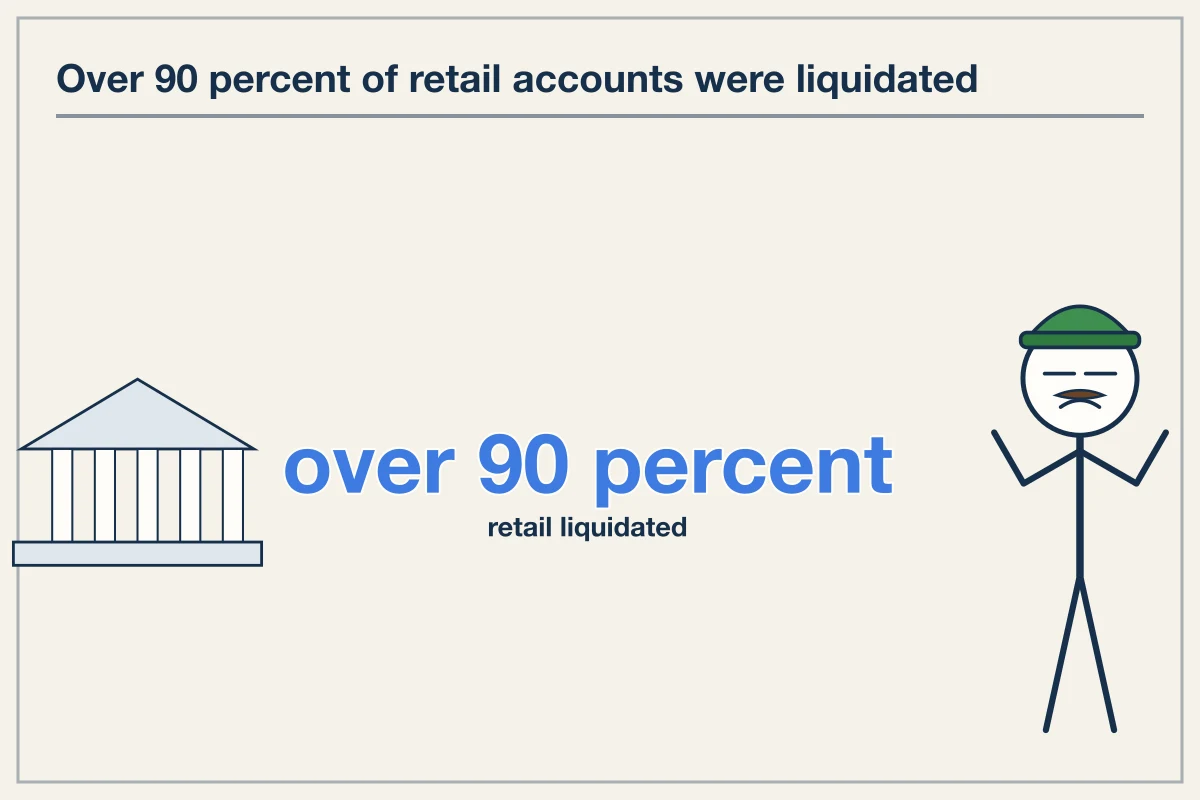
Structural wealth in crypto accumulated via exchange fee capture and market making, while retail directional traders faced systemic liquidation decay.
Mechanisms of Structural Wealth Accumulation
Over multi-year market cycles, exchange operators and market makers captured billions in gross fee revenue while over 90 percent of retail directional accounts faced complete liquidation.
Wealth accumulation in crypto markets relies on three distinct structural mechanisms:
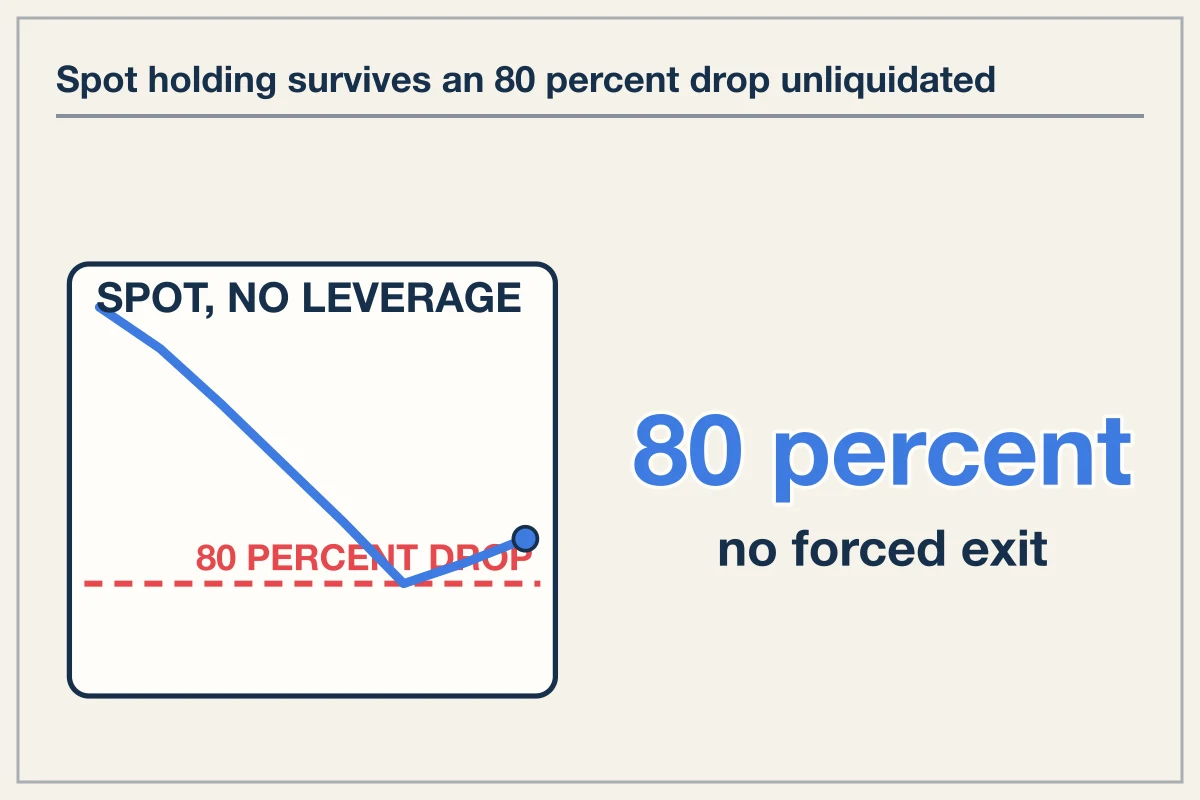
- Early Spot Accumulation: Purchasing spot assets without leverage avoids funding payments, borrow fees, and liquidation thresholds. Holding spot through an 80 percent market drawdown causes no forced liquidation.
- Market Making: Providing liquidity captures the bid-ask spread across continuous trading volume while earning fee rebates or paying minimal maker fees.
- Infrastructure Capture: Exchange venues charge trading fees on gross position volume regardless of whether the trader turns a profit.
Directional derivative trading, by contrast, subjects account equity to continuous fee drag, funding payments, and asymmetric liquidation mechanics.
Fee Schedules and Equity Friction
Exchanges calculate trading fees based on total position size rather than deposited margin. On a leveraged position, execution fees consume a significant percentage of account equity at open and close.
The table below outlines published venue fee schedules for standard default tiers:
| Venue | Spot Maker | Spot Taker | Futures Maker | Futures Taker |
|---|---|---|---|---|
| Bitget | 0.0010 | 0.0010 | 0.0002 | 0.00030 |
| Bybit | 0.0010 | 0.0010 | 0.0002 | 0.00055 |
| MEXC | 0.0000 | 0.0005 | 0.0000 | 0.00020 |
| OKX | 0.0008 | 0.0010 | 0.0002 | 0.00050 |
Consider a trader who deposits 5,000 USD margin and opens a 100,000 USD position using 20x leverage.
On Bybit, the futures taker fee is 0.00055, or 0.055 percent. Opening a 100,000 USD position incurs an immediate execution fee of 55 USD. Measured against the 5,000 USD account equity, this entry fee reduces equity by 1.1 percent before market prices change.
Closing the position via a taker order incurs an additional 55 USD fee. The round-trip execution cost equals 110 USD, which represents a 2.2 percent direct reduction in starting margin.
At 20x leverage, an adverse price move of 4.5 percent drops position value by 4,500 USD, reaching the liquidation threshold and wiping out the remaining equity.
Funding Rate Discrepancies and Position Drag
Holding perpetual futures positions introduces periodic funding payments every 8 hours. Funding rates equalize contract prices with spot markets by transferring capital between long and short position holders.
The table below compares normalized 8-hour funding rates and 24-hour trading volumes across major venues:
| Asset | MEXC 8h Rate | OKX 8h Rate | Bitget 8h Rate | Spread (8h) | 24h Volume (USD) |
|---|---|---|---|---|---|
| ETH | +0.0008% | +0.0031% | +0.0100% | 0.0092% | 8,389,287,621 |
| BTC | +0.0100% | +0.0086% | +0.0100% | 0.0014% | 5,481,803,652 |
| SOL | -0.0040% | -0.0084% | +0.0043% | 0.0127% | 1,487,020,078 |
| ZEC | -0.0007% | +0.0061% | +0.0100% | 0.0107% | 755,111,167 |
| XRP | +0.0019% | +0.0022% | +0.0081% | 0.0062% | 502,417,332 |
| TRUMP | N/A | -0.0415% | -0.0113% | 0.0302% | 410,852,598 |
Funding rates create substantial differences in carrying costs across exchanges.
For a 100,000 USD long SOL position on Bitget, where the 8-hour rate is +0.0043 percent, the long pays 4.30 USD every 8 hours, totaling 12.90 USD per day in holding costs.
On OKX, where the long SOL rate is -0.0084 percent, the long position receives 8.40 USD every 8 hours, totaling 25.20 USD per day in received funding.
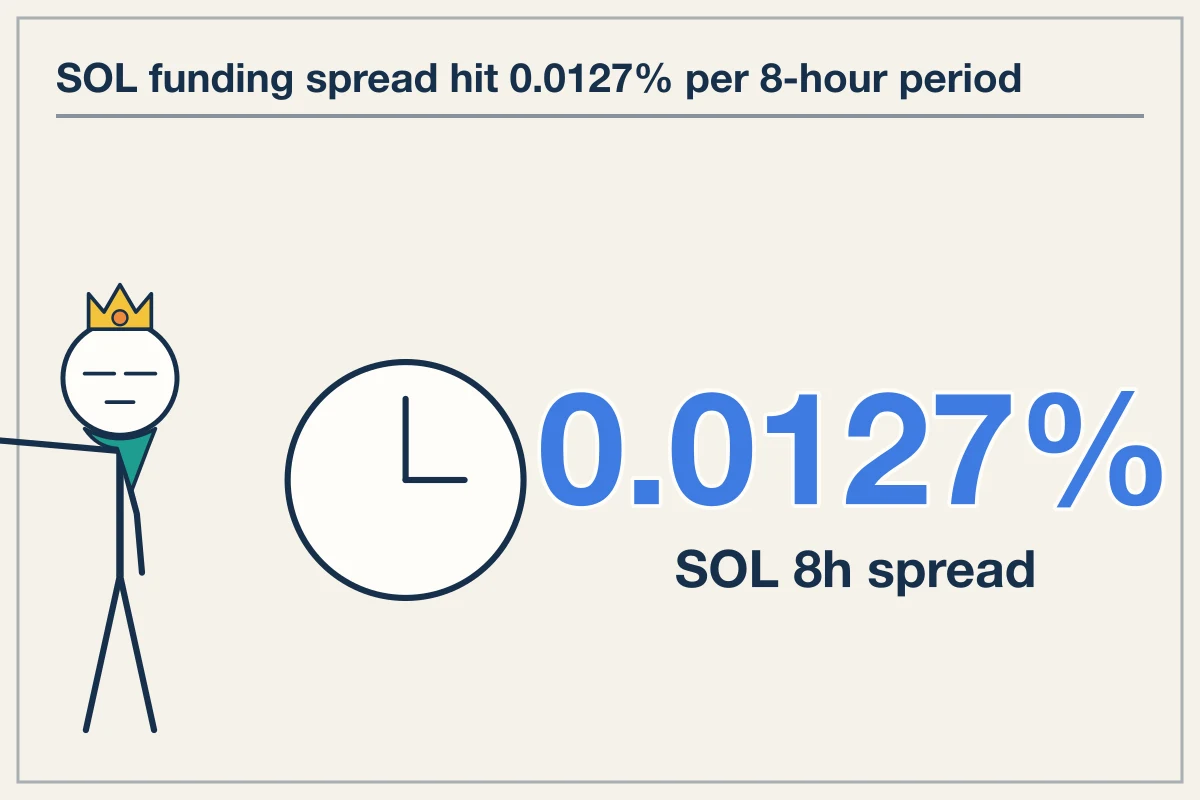
The venue spread on SOL long holding costs equals 0.0127 percentage points per 8-hour period, or 38.10 USD per day on a 100,000 USD position.
For TRUMP positions, OKX features a -0.0415 percent rate per 8 hours, yielding a spread of 0.0302 percentage points compared to Bitget. Holding a long TRUMP position of 100,000 USD on OKX yields 41.50 USD every 8 hours, or 124.50 USD per day, while on Bitget the same position yields 11.30 USD every 8 hours, or 33.90 USD per day.
Survivorship Bias and Retail Failure Rates
Public accounts of crypto wealth creation heavily over-index on directional trading success while ignoring failure rates across retail accounts.
Empirical data across retail futures brokers indicates that between 80 percent and 95 percent of active directional accounts lose capital over a 12-month period. When traders deploy leverage above 10x, liquidation rates approach 100 percent over long horizons due to volatility spikes exceeding margin thresholds.
Wealth in crypto derivative markets flows systematically toward exchange operators collecting volume-based taker fees and market makers collecting bid-ask spreads. Directional traders bear execution friction, variable funding drag, and liquidation risk.