· four exchange APIs · rebuilt daily
TRUMP perp funding spreads reach 0.0250 percent per eight hours
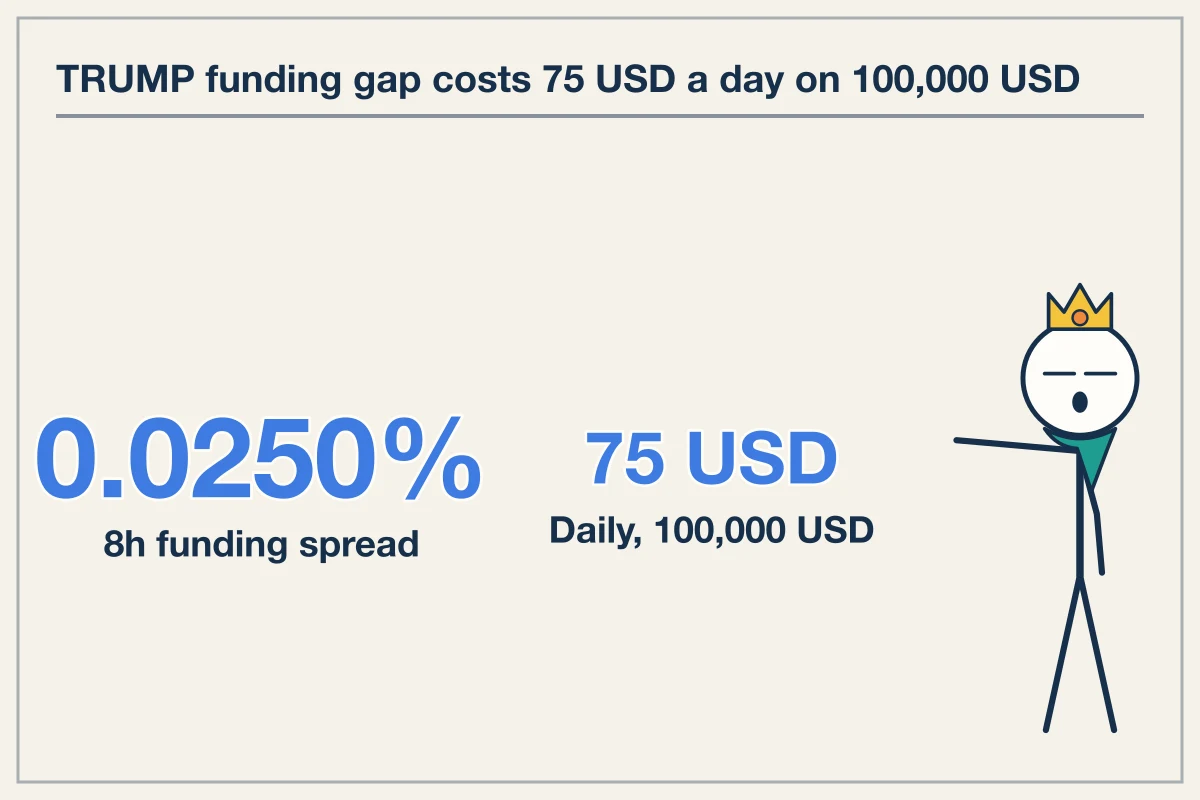
Dubai's VARA framework isolates venue operations while funding rate spreads between offshore perpetual markets reach 0.0250 percent per 8-hour period.
Dubai Regulatory Framework and Global Execution
TRUMP perpetual futures exhibit an 8-hour funding rate spread of 0.0250 percentage points between OKX and Bitget, translating to a 75 USD daily variance on a 100,000 USD position. While local regulatory regimes like Dubai's Virtual Assets Regulatory Authority establish structural rules for operating entities, execution costs for perpetual futures remain tied to venue liquidity and rate mechanics.
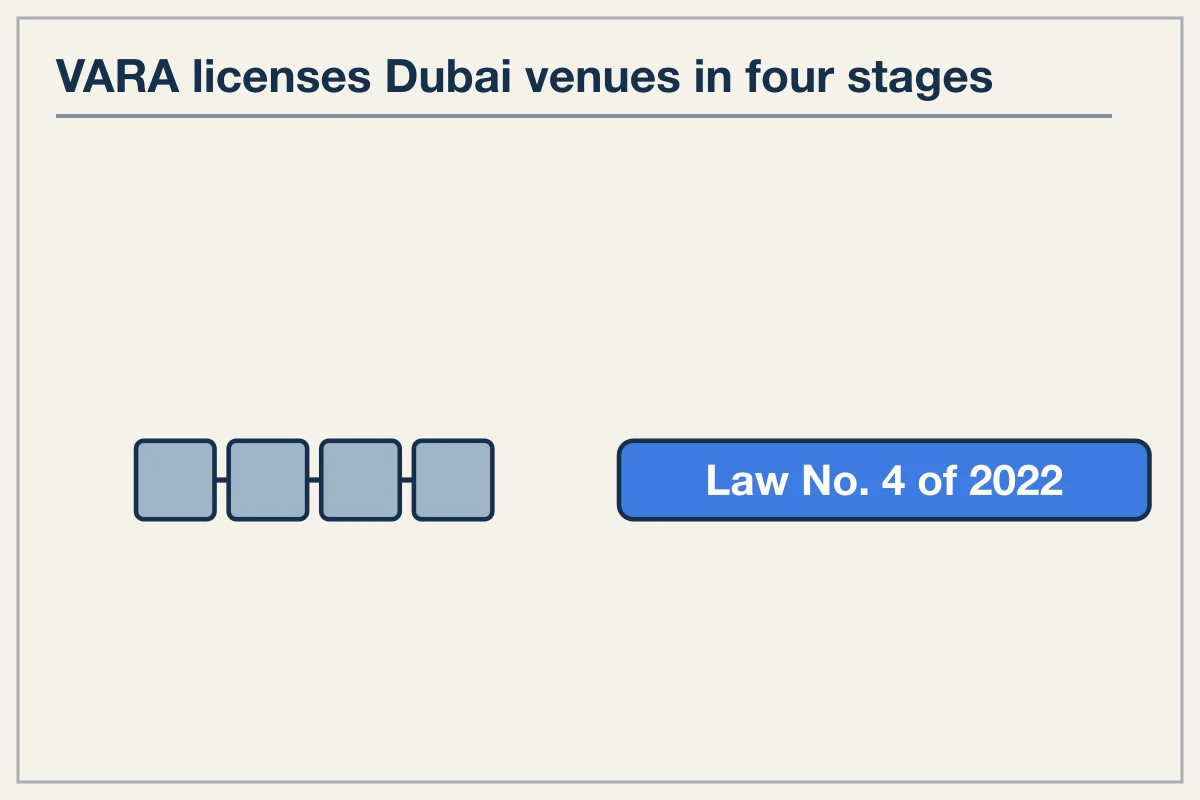
Dubai's regulatory model relies on Law No. 4 of 2022, which established VARA as the primary regulator for virtual assets across Dubai and its free zones, with the exception of the Dubai International Financial Centre. The DIFC operates independently under the Dubai Financial Services Authority. VARA implemented a four-stage licensing process comprising Provisional Permit, Preparatory License, Operating License, and Full Market Product License. Operating entities must comply with specific rulebooks covering compliance, custody, risk management, and market conduct.
For active derivatives traders, jurisdictional licensing dictates collateral security and fiat gateways, but contract mechanics determine net position holding costs. Venues operating under distinct jurisdictional frameworks maintain separate order books or route orders to global pools, where maker fees, taker fees, and 8-hour funding settlements accumulate.
Perpetual Futures Fee Schedules
Trading costs begin with baseline entry and exit fees. Futures fee schedules across major offshore venues display significant variance at default tiers.
| Venue | Futures Maker Fee | Futures Taker Fee | Spot Maker Fee | Spot Taker Fee |
|---|---|---|---|---|
| MEXC | 0.0000% | 0.0200% | 0.0000% | 0.0500% |
| Bitget | 0.0200% | 0.0300% | 0.1000% | 0.1000% |
| OKX | 0.0200% | 0.0500% | 0.0800% | 0.1000% |
| Bybit | 0.0200% | 0.0550% | 0.1000% | 0.1000% |
Opening and closing a 100,000 USD futures position via taker orders on Bybit costs 110 USD in total exchange fees at a 0.00055 fee rate. The same transaction on MEXC costs 40 USD at a 0.0002 fee rate. This 70 USD entry and exit difference represents a 0.07 percentage point cost friction relative to initial nominal position size before accounting for position holding duration.
Live Normalised 8-Hour Funding Spreads
Funding rates compensate counterparty exposure across 8-hour settlement cycles. Spreads vary across assets based on venue open interest and long-short imbalances.
| Asset | MEXC 8h Rate | OKX 8h Rate | Bitget 8h Rate | Spread | 24h Volume (USD) |
|---|---|---|---|---|---|
| ETH | +0.0035% | +0.0037% | +0.0100% | 0.0065% | 8,203,138,364 |
| BTC | +0.0100% | +0.0083% | +0.0100% | 0.0017% | 5,296,017,024 |
| SOL | -0.0040% | -0.0073% | +0.0038% | 0.0111% | 1,440,157,367 |
| ZEC | -0.0013% | +0.0100% | +0.0100% | 0.0113% | 737,199,743 |
| XRP | +0.0036% | +0.0038% | +0.0089% | 0.0053% | 484,632,774 |
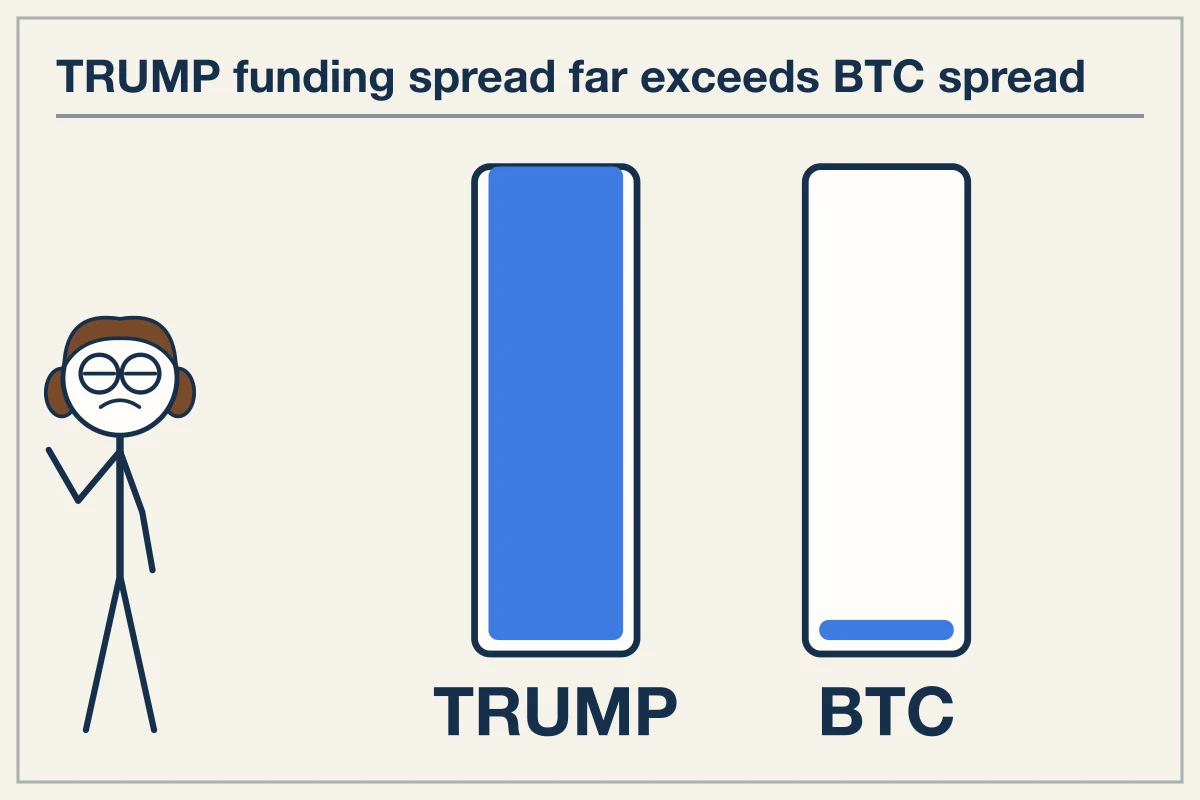
| TRUMP | N/A | -0.0368% | -0.0118% | 0.0250% | 409,428,621 |
Negative funding rates indicate that short position holders pay long position holders. On SOL perps, holding a long position on OKX yields a funding payment of 0.0073 percent every 8 hours, whereas holding the exact same long position on Bitget incurs a payment of 0.0038 percent every 8 hours.
Arithmetic of Position Holding Costs
Consider holding a long 100,000 USD position in TRUMP perps over a 24-hour window, requiring three settlement periods.
On OKX, the 8-hour rate is -0.0368 percent. Because the rate is negative, short positions pay long positions. Per 8-hour interval payment: 100,000 multiplied by 0.000368 equals 36.80 USD. Daily funding cash flow: 36.80 multiplied by 3 equals 110.40 USD.
On Bitget, the 8-hour rate is -0.0118 percent. Per 8-hour interval payment: 100,000 multiplied by 0.000118 equals 11.80 USD. Daily funding cash flow: 11.80 multiplied by 3 equals 35.40 USD.
The net holding variance between the two venues equals 110.40 minus 35.40, which equals 75.00 USD per day.
Now factor in execution fees. Entering a 100,000 USD long position on OKX as a taker costs 50 USD at 0.0005. Exiting as a taker costs another 50 USD. Total taker fees equal 100 USD. Entering on Bitget as a taker costs 30 USD at 0.0003. Exiting as a taker costs another 30 USD. Total taker fees equal 60 USD.
Subtracting round-trip execution costs from 24-hour funding payments reveals the net outcome: On OKX: 110.40 USD funding received minus 100.00 USD fee equals a positive net balance adjustment of 10.40 USD. On Bitget: 35.40 USD funding received minus 60.00 USD fee equals an absolute cash drawdown of 24.60 USD.
Holding the position for 24 hours on one venue produces a positive cash offset, while holding it on another results in an absolute net loss due to taker fee drag and narrower funding payouts.
Practical Execution Consequence
Regulatory compliance under frameworks like VARA isolates corporate entity risk, but order execution economics operate strictly on fee parameters and funding imbalances. A trader holding long leverage on Bitget pays higher funding or receives lower funding payouts relative to OKX across SOL, BTC, and TRUMP contracts.
For swing positions held past multiple 8-hour resets, cumulative funding discrepancies exceed baseline taker fee gaps. Selecting a venue based solely on location or regulatory licensing without calculating 8-hour funding spreads introduces quantifiable cost drag on open position margin.