· four exchange APIs · rebuilt daily
Why is Monaco so wealthy and how its resident capital shifted

The finding
Monaco generates state revenue without personal income tax by levying value-added tax on commercial turnover while top crypto venues process $7,610,863,465 in 24-hour ETH perpetual volume.
State funding relies on indirect consumption taxes and property transaction duties.
Resident demographics shifted from passive account holders to active trading firms over the last decade.
Global compliance standards pushed uncooperative capital out in favor of active asset managers.
Structural factors behind why is Monaco so wealthy
Monaco generates state revenue through value-added tax on commercial turnover while top crypto venues process $7,610,863,465 in 24-hour ETH perpetual volume. Traders and capital allocators examining why is Monaco so wealthy find an economic system designed around indirect taxation and real estate transaction duties.
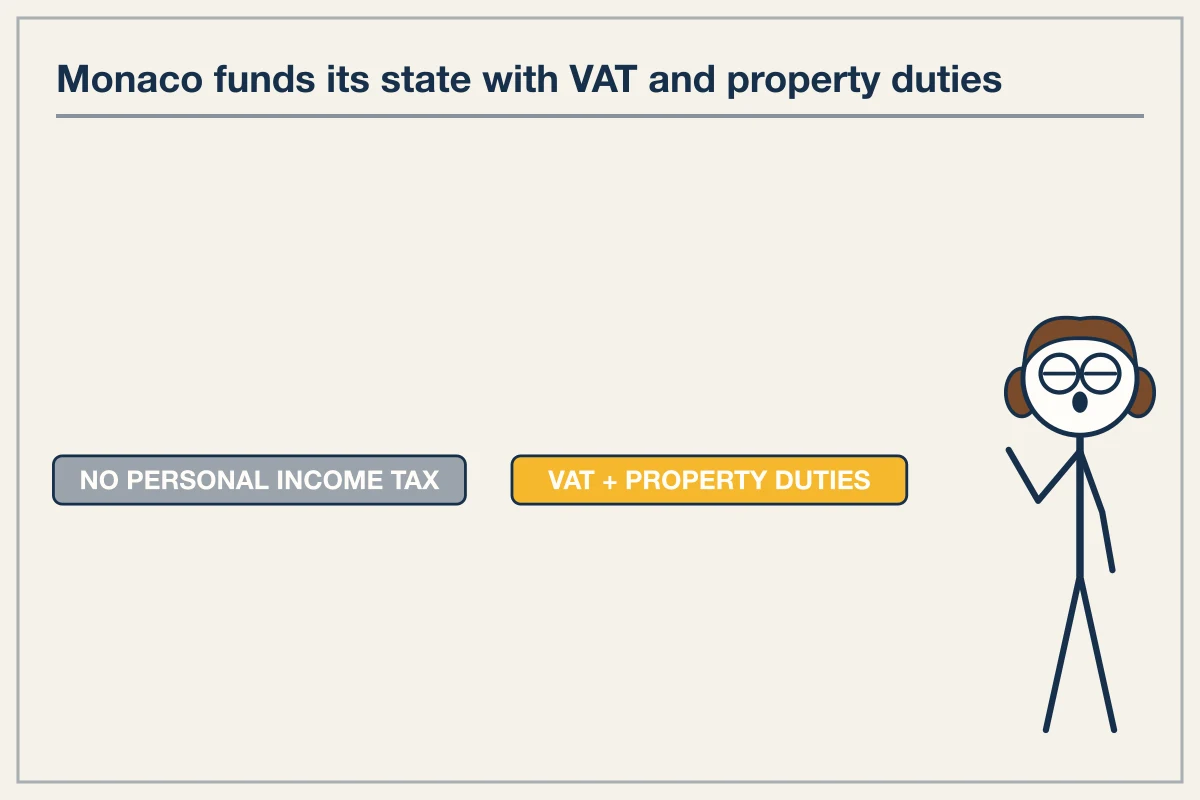
State receipts rely on value-added tax collected on local commercial sales and luxury consumption. Businesses operating within the territory pay corporate tax on profits if a specified portion of turnover occurs externally.
Government concessions create additional fiscal revenues. State-operated entities retain legal monopolies over utility networks, postal systems, and telecommunications services across the municipality.
Real estate development generates substantial public income. Property sales trigger mandatory registration duties and conveyance taxes paid directly to the national treasury.
Worth knowing
Monaco eliminated personal income tax in the nineteenth century, establishing a public finance model centered on consumption taxes and real estate duties.
How resident demographics changed over the last decade
The demographic profile of individuals living in the principality altered significantly over the past ten years. Historically, the jurisdiction attracted legacy family wealth seeking financial secrecy and static asset preservation.
Global implementation of Common Reporting Standard protocols removed banking opacity. Passive account holders who relied on unmapped offshore banking structures left the territory.
Active corporate founders, quantitative traders, and family office directors moved into the jurisdiction. These newer residents operate active trading companies requiring operational staff, legal counsel, and venue connectivity.
Modern residents deploy capital directly into global derivative markets. For these entities, venue execution costs and funding mechanics dictate overall capital retention.
Where this goes wrong
Relocating capital to a zero-income-tax jurisdiction does not prevent capital erosion when positions incur high taker fees and adverse funding spreads.
Execution costs and venue selection for resident trading capital
Active market participants operating from low-tax jurisdictions focus on execution friction. Holding perpetual futures positions incurs exchange trading fees and ongoing funding payments.
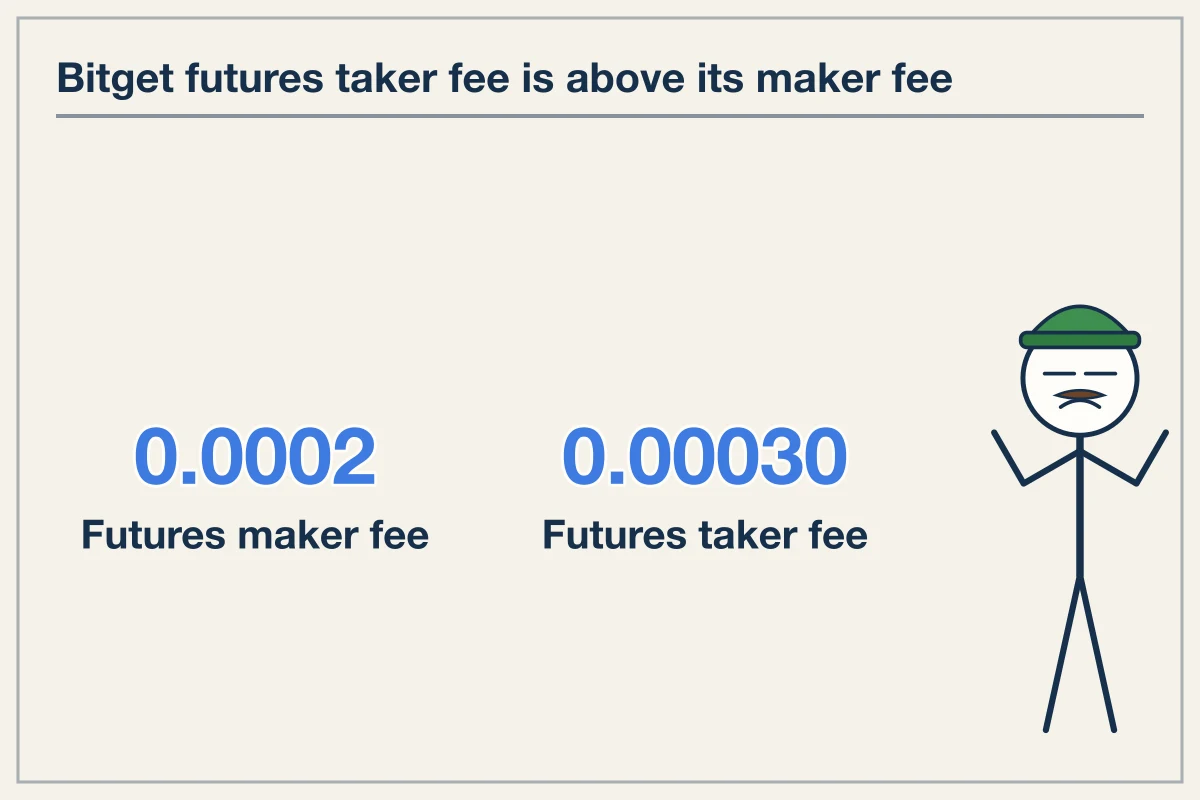
Fee schedules differ between market makers and market takers across venues. Choosing order types and execution venues without analyzing fee tables increases trading overhead.
The table below displays standard published futures fee schedules across major derivative venues.
| Venue | Spot Maker Fee | Spot Taker Fee | Futures Maker Fee | Futures Taker Fee |
|---|---|---|---|---|
| Bitget | 0.0010 | 0.0010 | 0.0002 | 0.00030 |
| Bybit | 0.0010 | 0.0010 | 0.0002 | 0.00055 |
| MEXC | 0.0000 | 0.0005 | 0.0000 | 0.00020 |
| OKX | 0.0008 | 0.0010 | 0.0002 | 0.00050 |
Executing a market order on Bybit costs 0.00055 in futures taker fees. Executing that same order on MEXC costs 0.00020 in taker fees.
This represents a fee difference of 0.00035 per market order. On high-turnover trading strategies, this fee variance impacts portfolio performance immediately.
What to do instead
Evaluate normalized 8-hour funding rates alongside exchange taker fees when selecting venues for directional perpetual positions.
Impact of perpetual funding rates on position holding costs
Perpetual futures contracts adjust position balances via periodic funding payments calculated every 8 hours. Funding rates align perpetual derivative prices with underlying spot index prices.
Positive funding rates require long position holders to pay short position holders. Negative funding rates require short position holders to pay long position holders.
The table below lists normalized 8-hour funding rates and 24-hour trading volumes across major asset pairs.
| Asset | Highest Funding Venue (Rate) | Lowest Funding Venue (Rate) | 8-Hour Funding Spread | 24-Hour Volume |
|---|---|---|---|---|
| ETH | Bitget (+0.0085%) | Bybit (+0.0001%) | 0.0084% | $7,610,863,465 |
| BTC | MEXC (+0.0004%) | Bybit (-0.0014%) | 0.0018% | $7,264,960,769 |
| SNDK | Bitget (+0.0000%) | OKX (-0.0214%) | 0.0214% | $1,813,156,505 |
| ZEC | Bybit (+0.0100%) | Bitget (-0.0229%) | 0.0329% | $1,389,221,645 |
| SOL | MEXC (+0.0006%) | Bybit (-0.0100%) | 0.0106% | $978,864,173 |
| XAU | Bybit (+0.0000%) | OKX (+0.0000%) | 0.0000% | $684,316,864 |
Holding a long ZEC position on Bybit costs +0.0100% per 8 hours in funding payments. Holding that same long ZEC position on Bitget earns -0.0229% per 8 hours.
The resulting funding spread of 0.0329 percentage points per 8 hours equals 0.0987 percentage points per day. Over a 30-day holding period, this spread compounds to 2.961 percentage points of capital divergence.
Selecting venues based on live funding rates prevents unnecessary holding costs for long-term position holders.
How does Monaco generate government revenue without income tax?
Monaco funds public operations through value-added tax levied on commercial turnover and consumption. Additional state revenues derive from property transfer duties, stamp taxes, and legal monopolies on utility and communication networks.
What demographic changes occurred in Monaco over the last decade?
Automatic tax information exchange rules ended banking secrecy and reduced passive wealth holdings. Active entrepreneurs, asset managers, and quantitative traders replaced those accounts, establishing operating corporate entities within the jurisdiction.
Which venue is cheapest for holding long ETH perpetual positions?
Bybit currently offers the lowest funding rate for long ETH perpetual positions at +0.0001% per 8 hours. Bitget charges +0.0085% per 8 hours, creating an 8-hour spread of 0.0084 percentage points between venues.
How does funding spread impact long-term perpetual holding costs?
Funding spreads settle every 8 hours and accumulate over time. A 0.0329 percentage point 8-hour spread on ZEC generates a 2.961 percentage point cost divergence over a 30-day holding window.