· four exchange APIs · rebuilt daily
Bitcoin halving explained and what it costs to hold BTC perps

The finding
The Bitcoin halving reduces daily supply issuance by 50% every 210,000 blocks, cutting miner block rewards without directly altering open interest or venue funding rates.
At a $60,000 BTC price, the reduction from 900 BTC to 450 BTC daily removes $27,000,000 in new sell pressure per day.
That daily reduction represents less than 0.5% of the $6,278,127,854 in 24-hour perpetual futures volume across major exchanges.
The Code-Enforced Halving Schedule
The bitcoin halving explained in mechanical terms is a programmatic reduction in the block subsidy written into the Bitcoin core client. Every 210,000 blocks—approximately every four years—the network halves the number of new Bitcoins generated per valid block.
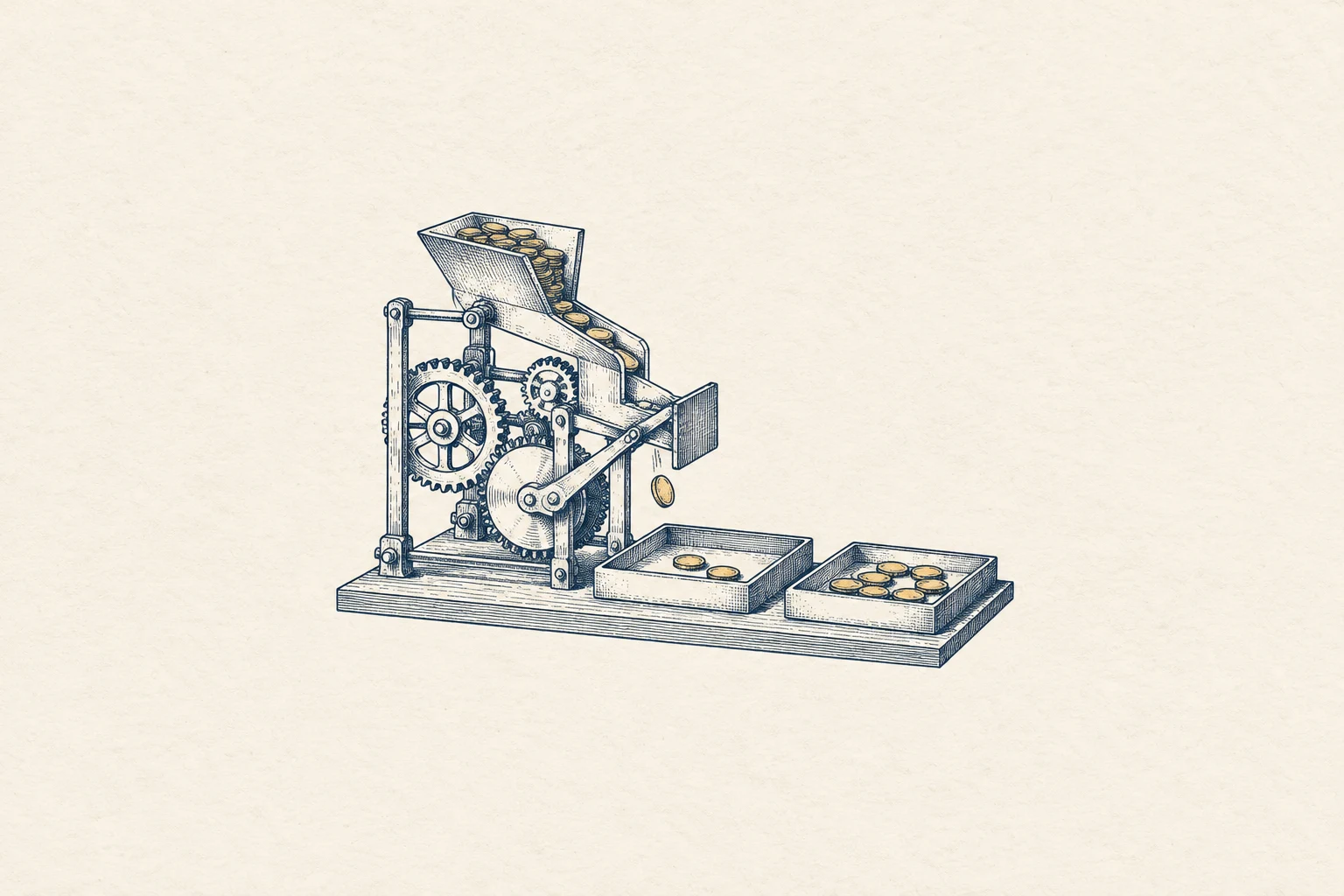
The initial subsidy was 50 BTC per block in 2009. The schedule reduced this to 25 BTC in 2012, 12.5 BTC in 2016, 6.25 BTC in 2020, and 3.125 BTC in 2024. This decay continues until the block reward reaches zero around the year 2140, capping total supply at 20,999,999.9769 BTC.
Because block generation target times adjust every 2,016 blocks based on total network hash rate, the target emission rate remains fixed regardless of hardware efficiency or market price.
Worth knowing
The halving block height is entirely deterministic. Market participants know the exact block number of every future halving years in advance.
Bitcoin halving explained through miner issuance and perp volume
Traders often cite the halving as a supply shock catalyst. The mechanical reality depends on the ratio between new block issuance and total secondary market liquidity.
Prior to a halving, miners earn 900 BTC per day across 144 blocks. After the halving, miners earn 450 BTC per day. Assuming miners liquidate 100% of their earned block subsidies to cover operational expenditure, the net reduction in spot market sell pressure is 450 BTC every 24 hours.
At a reference price of $60,000 per coin, this change equals $27,000,000 in reduced daily selling. Across major perpetual futures venues, 24-hour BTC perpetual volume stands at $6,278,127,854. The daily reduction in mined supply equals 0.43% of the single-day perpetual trading volume on these four venues alone.
Where this goes wrong
Expecting a deterministic supply change of 450 BTC per day to instantly force a price spike ignores the fact that derivative order books handle tens of billions of dollars in daily turnover.
Miner Economics and Transaction Fee Shares
Miners receive revenue from two sources: the block subsidy and transaction fees paid by network users. As the block subsidy declines, transaction fees must comprise a larger percentage of total block revenue to maintain network security expenditures.
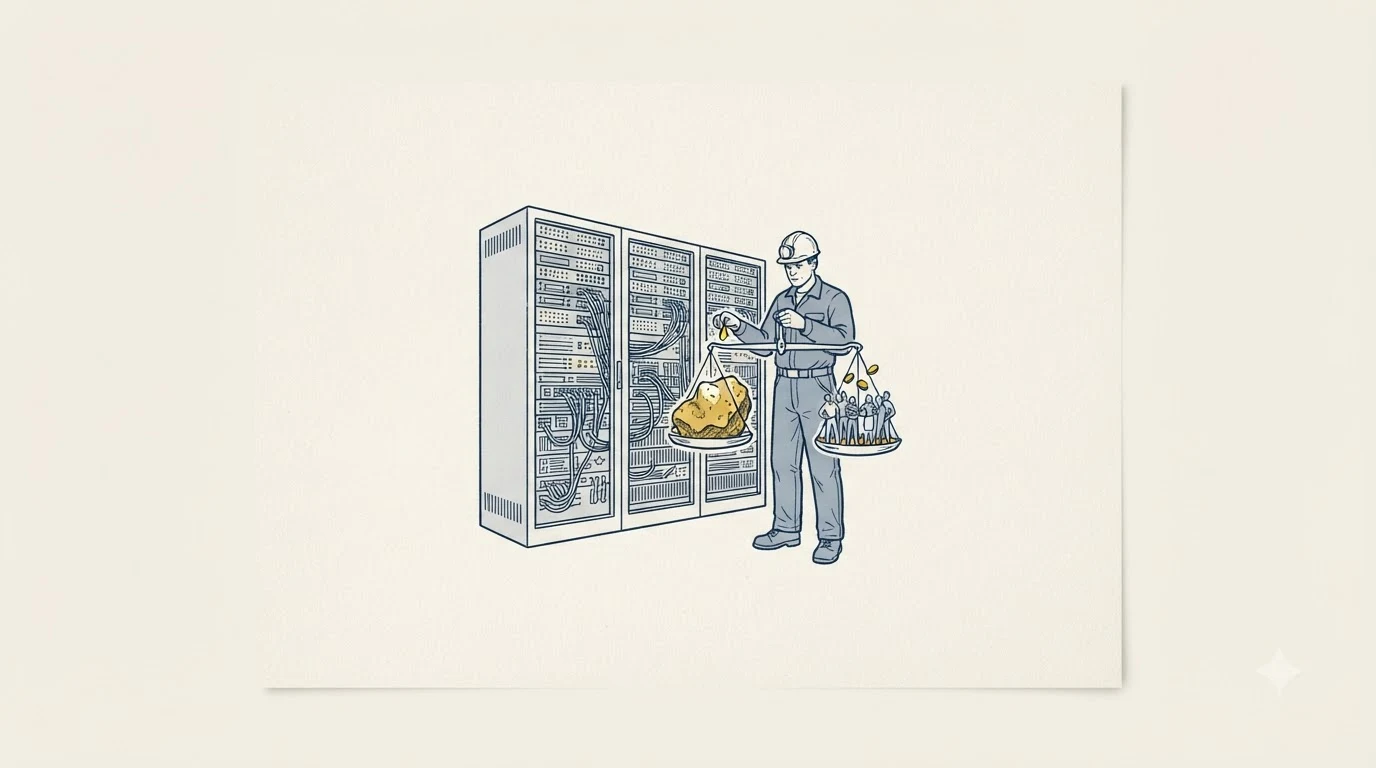
When the subsidy drops from 6.25 BTC to 3.125 BTC, a miner with static operational costs sees gross revenue cut almost in half overnight unless market prices double or fee density increases.
Miners operating inefficient hardware or paying high electricity rates face negative cash flows immediately following the event. These entities must either draw down existing BTC reserves, liquidate capital equipment, or disconnect uncompetitive mining rigs until hash rate difficulty drops. This operational squeeze can cause temporary spikes in spot selling as distressed miners liquidate treasury holdings to cover debt obligations.
Cost of Holding BTC Perpetual Positions Across Venues
While the supply issuance curve is global and uniform, the cost of holding a leveraged BTC position depends entirely on venue-specific funding rates and fee tiers. Halving volatility often leads to wide funding rate divergence between exchanges as retail and institutional positioning splits.
The table below shows live 8-hour funding rates and contract fee schedules for BTC perpetual futures:
| Venue | 8h Funding Rate | Annualised Rate | Futures Maker Fee | Futures Taker Fee |
|---|---|---|---|---|
| Bybit | +0.0015% | +1.64% | 0.0200% | 0.0550% |
| MEXC | +0.0039% | +4.27% | 0.0000% | 0.0200% |
| OKX | +0.0047% | +5.15% | 0.0200% | 0.0500% |
| Bitget | +0.0100% | +10.95% | 0.0200% | 0.0300% |
The spread between Bybit (+0.0015%) and Bitget (+0.0100%) is 0.0085 percentage points per 8-hour interval.
Holding a $100,000 BTC long position on Bitget costs $30.00 per day in funding payments ($100,000 x 0.000100 x 3). The same $100,000 long position on Bybit costs $4.50 per day ($100,000 x 0.000015 x 3). Over a 30-day holding period, holding long on Bitget costs $900 in funding, compared to $135 on Bybit. The location of the position changes the holding cost by $765 per $100,000 of open interest regardless of halving price action.
What to do instead
Calculate your 30-day funding expense across venue spreads before carrying long directional bias into supply events.
How does the Bitcoin halving affect perpetual funding rates?
The halving changes block issuance, but perpetual funding rates are driven by the ratio of long to short open interest on individual exchanges. Funding rates adjust every eight hours based on the premium or discount of the swap price relative to the index price, not by the block reward schedule.
What happens to Bitcoin miners when the halving occurs?
Miners experience an immediate 50% drop in block subsidy revenue. Those with higher marginal operating costs must shut down hardware or sell BTC reserves to cover fiat operational expenses, causing hash rate adjustments until the next difficulty retarget.
Why does the Bitcoin supply change not create an immediate price shock?
The halving schedule is fully public and hardcoded into the protocol software years in advance. Market participants price known emission changes into the futures basis long before the specific block height is reached, and daily issuance reduction is minor compared to daily trading volume.